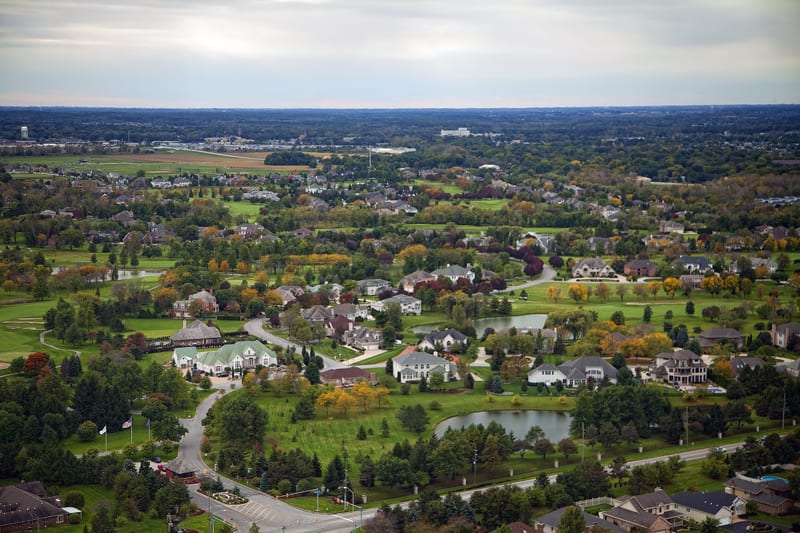
Thinking about trading Chicago’s pace for more space in Dyer, Indiana? You’re not alone. Many buyers make the move for suburban living, single-family homes, and a budget that goes further. This guide shows you how to compare costs, plan your commute, set up utilities, and handle cross-border paperwork so your move feels simple and predictable. Let’s dive in.
Why Dyer works for Chicago movers
Dyer sits in Lake County, Indiana, within the greater Chicago metro. You get a quieter, suburban feel with access to Northwest Indiana job centers and Chicago. Driving time to downtown Chicago typically ranges from about 30 minutes during off-peak to 60 minutes or more in rush hour.
If you want a single-family home, a yard, and a neighborhood pace, Dyer offers a strong mix. The town is smaller in scale than most Chicago neighborhoods, and many households find that property taxes and everyday costs can feel more manageable. Your exact savings depend on the home you choose, your commute, and your insurance profile.
Housing and the buying process
What you’ll find in Dyer homes
Dyer’s housing leans suburban. You’ll see post-war and mid-century homes alongside newer subdivisions. The majority are single-family properties. If you need multifamily or more urban options, nearby cities in Northwest Indiana may add variety to your search.
Selling in Chicago, buying in Dyer
If you are selling a Chicago property to buy in Dyer, plan your timeline early. You can sell first, then buy, which reduces risk but may require temporary housing. Or you can buy first and carry both for a short period if your financing allows. Contingencies and bridge strategies can help you align both closings.
Ask your agent for a neighborhood CMA to understand Dyer pricing trends, and compare that to your Chicago sale proceeds. Confirm your cash needed for closing and reserves for moving, inspection items, and potential repairs.
Inspections and closing norms in Indiana
Indiana transactions typically use state disclosure forms. Budget for a home inspection and consider pest and radon testing. For older Midwestern homes, pay close attention to basement moisture, sump pumps, roof age, HVAC condition, and whether the home connects to municipal sewer or has a private system. Closings commonly occur with a title company. Your agent can advise if an attorney is customary in Lake County.
Before you write an offer, review the property tax history and any special assessments. Start with the county’s resources on the Lake County official site, and ask for recent utility bills and repair records from the seller.
Taxes and cost of living
Income and sales taxes across state lines
Living in Indiana and working in Illinois can affect your tax filings. Both states have their own rules for resident and nonresident returns, as well as credits. Review guidance from the Indiana Department of Revenue and the Illinois Department of Revenue, and consider a tax professional for your specific situation. Sales tax structures differ too, so check current rates before large purchases.
Property taxes and exemptions
Indiana property taxes are administered locally, with rules for assessments, due dates, and exemptions set at the county level. Many movers find Indiana property taxes competitive compared to parts of Illinois, but every property is different. Verify the assessed value and exemptions on the Lake County official site. Ask about homestead exemptions and any local caps or credits that may apply to your primary residence.
Insurance, utilities, and daily costs
Auto and homeowners insurance premiums vary by ZIP code and state rules. Get new quotes before you move. For utilities, confirm providers and estimated costs early. Open your water and sewer account with the town and set up gas and electric service. Dyer water and sanitation information is on the Town of Dyer website, and regional electric and gas service is available through NIPSCO. Build a commuting budget that includes fuel, tolls, and parking or transit.
Commuting from Dyer to Chicago
Typical drive times and routes
The drive to downtown Chicago often takes about 30 to 60-plus minutes depending on traffic. Primary routes include I-80/I-94, I-294, and nearby US highways. Congestion can be heavy during peak times, so test your route with a maps app during the hours you plan to travel.
South Shore Line option
Many Dyer residents drive 10 to 20 minutes to a station on the NICTD South Shore Line in Hammond, East Chicago, or Gary, then take the train into Chicago’s Millennium Station. Check schedules and fares on the NICTD South Shore Line site. Park-and-ride plus train is a popular way to save on parking and reduce the stress of daily traffic.
Tolls, parking, and hybrid work
If you use tollways like I-294 or the Indiana Toll Road, set up an electronic toll account and estimate your monthly costs. Downtown parking adds up quickly. If your employer allows hybrid or remote work, even one or two at-home days can cut commute costs and time.
Schools and family services
Districts, boundaries, and enrollment
School assignments follow local district boundaries. Because boundaries and capacity can change, verify the assigned schools for any address. Review state report cards, graduation rates, and programs on the Indiana Department of Education site. For enrollment, most districts require proof of residency, a birth certificate, immunization records, and transcripts.
Childcare and private options
Northwest Indiana offers a range of licensed childcare providers and private or parochial schools. Start outreach early to understand waitlists, tuition, and transportation options. Map travel times from home to school and confirm bus routes if applicable.
Utilities, permits, and town services
Utility setup checklist
Use this quick start list to reduce last-minute scrambling:
- Water, sewer, and sanitation: Open or transfer your account with the Town of Dyer. Bring photo ID and your lease or closing statement.
- Electric and gas: Contact NIPSCO to start service. Ask about deposits, turn-on windows, and budget billing.
- Internet and cable: Check availability by address with regional providers. Schedule installations early during peak moving seasons.
- Trash and recycling: Confirm pickup days, bulk item rules, and holiday schedules on the town site.
Permits and home projects
Planning a fence, deck, or renovation? Many exterior projects need permits. Confirm requirements with the building department on the Town of Dyer site before you buy materials or hire a contractor. Ask sellers for records of recent permits and inspections.
Safety and healthcare
For objective crime data, review the FBI Crime Data Explorer and contact local police for neighborhood trends. For healthcare, major systems such as Franciscan Health serve the area. Identify nearby urgent care and hospital options that fit your insurance before move-in.
Licenses, vehicles, and voting
Driver’s license and vehicle registration
Most new residents must obtain an Indiana driver’s license and register vehicles within a set period after establishing residency. Check deadlines, fees, and required documents with the Indiana BMV. Bring your current license, title or lease documents, proof of insurance, and proof of Indiana address. If you need an emissions test or have title transfer questions, schedule those early.
Voter registration and records
Once you have proof of residency, update your voter registration in Indiana. Many residents handle this shortly after updating their license. Transfer prescriptions and medical records to local providers around the same time to avoid gaps in care.
Neighborhoods and quality of life
Parks, recreation, and community
Dyer offers parks, trails, and community events typical of Northwest Indiana towns. You are also close to larger retail, dining, and entertainment hubs across Lake County. Explore at different times of day to gauge traffic, noise, and park usage.
Do your homework on safety
Every community has variation from block to block. Review data on the FBI Crime Data Explorer, speak with local law enforcement, and visit neighborhoods to see how they feel at different times. Use this input as one factor in your decision.
Your moving timeline
- 8+ weeks: Research Dyer neighborhoods and commute options. Connect with a local agent for a CMA and strategy. Request school records. Get moving quotes.
- 4 to 6 weeks: Finalize your sell-then-buy or buy-then-sell plan. Schedule movers. Set utility turn-on/off dates for both homes. If renting, notify your landlord.
- 2 to 3 weeks: File USPS mail forwarding, update key subscriptions, and begin packing nonessentials. Confirm closing and walk-through dates.
- 7 to 10 days: Transfer medical and dental records and prescriptions. Organize documents for the Indiana BMV. Prepare funds for closing and mover tips.
- Moving day: Keep IDs, closing papers, and essentials with you. Take move-in photos. Confirm utilities are active and record meter readings where applicable.
- First 30 to 90 days: Update your driver’s license and registration, register to vote, finalize school enrollment, and update insurance policies.
Work with a local team that simplifies moves
Crossing state lines adds decisions about taxes, commuting, paperwork, and timing. You do not have to navigate it alone. Our systems help you coordinate your Chicago sale and Dyer purchase, line up timelines, and avoid surprises. If you prefer bilingual support, we can help. When you are ready, reach out to Simplify Your Move Realty for a local plan tailored to your move.
FAQs
How much cheaper is it to live in Dyer than Chicago?
- It depends on the home, commute, and insurance; compare mortgage, property taxes, utilities, tolls, parking or transit, and updated insurance quotes for a side-by-side view.
What are the taxes if I live in Indiana and work in Illinois?
What is the commute like from Dyer to downtown Chicago?
- Typical drives range from about 30 minutes off-peak to 60-plus minutes in rush hour; many residents use the NICTD South Shore Line from nearby stations.
How do schools in Dyer compare to Chicago?
- “Better” is subjective; review state report cards and program details on the Indiana Department of Education site and visit individual schools to assess fit.
Are Indiana property taxes lower than Illinois?
- Often in many comparisons, but it varies by property; verify assessed values, exemptions, and bills through the Lake County official site.
Do I need a new driver’s license after moving to Dyer?
- Yes, new residents must update their license and registration within the time frame set by the Indiana BMV; bring required identification and vehicle documents.